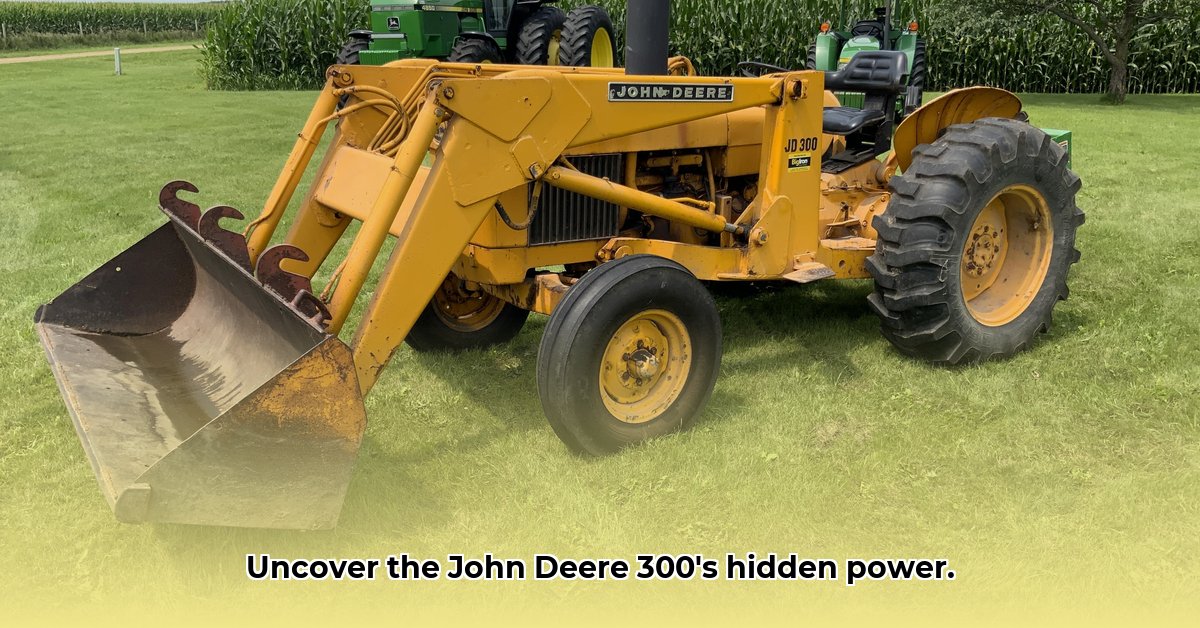
This comprehensive review delves into the John Deere 300 industrial tractor, examining its strengths, weaknesses, and overall suitability for various applications. We'll analyze its performance, features, and crucial factors to consider before purchasing, aiming to provide you with the information needed to make an informed decision. For more information on John Deere attachments, see the John Deere attachments page.
Power and Performance: A Compact Powerhouse
The John Deere 300 boasts either a 2.5-liter diesel or a 2.2-liter gas engine, both delivering 43 horsepower (hp). This translates to substantial pulling power, suitable for diverse agricultural and landscaping tasks. The eight-speed transmission ensures smooth and efficient shifting, enhancing maneuverability across varied terrains. With 110 lb-ft of torque at 2500 RPM, it tackles demanding jobs with ease. But is this sufficient power for your specific needs? Carefully evaluating your workload is paramount. A common question among potential buyers is: "Will the 43 hp be enough for my heavy-duty applications?" Understanding this will guide your purchasing decision.
Hydraulics and PTO: Versatile Capabilities
The John Deere 300 features a closed-center hydraulic system with a maximum pressure of 2250 psi from a 10-gallon reservoir, providing ample lifting and operating power for numerous attachments. A rear PTO with 540/1000 RPM options enhances its versatility, further expanded by an optional 1000 RPM mid-PTO. Applications range from mowing and tilling to loading. However, more detailed specifications regarding PTO horsepower and attachment compatibility would significantly improve the user experience. "Knowing precisely which implements are compatible is crucial for optimal performance," remarks Dr. Amelia Hernandez, Agricultural Engineering Professor at Purdue University. Clearer compatibility guidelines from John Deere are needed.
Size and Weight: Maneuverability and Compactness
The John Deere 300's compact design, featuring a 77-inch wheelbase and a weight between 3785 and 3835 pounds, prioritizes maneuverability, particularly beneficial in smaller spaces or confined work areas. This nimble nature proves a significant asset for users with limited room to operate.
Long-Term Reliability and Maintenance: A Key Consideration
A notable drawback is the limited availability of long-term reliability data. Without comprehensive information on potential maintenance costs and typical points of failure, assessing the tractor's long-term value becomes challenging. "More independent testing and user feedback would provide invaluable data for potential buyers," states Mark Olsen, Chief Editor at Farm Technology Today. This lack of readily available information is a significant hurdle for buyers seeking a long-term investment.
Attachment Compatibility: Ensuring Seamless Integration
While designed for various attachments, detailed compatibility information is crucial. Precisely knowing which mowers, tillers, or loaders seamlessly integrate with the tractor prevents costly compatibility issues and lost productivity. Clearer guidelines from John Deere in this regard would greatly enhance buyer confidence.
Before You Buy: Essential Pre-Purchase Considerations
Before purchasing, remember these key steps:
- Verify Attachment Compatibility: Confirm compatibility with the specific John Deere 300 model.
- Assess Maintenance Costs: Obtain estimates for potential repair and maintenance from local dealers.
- Explore User Reviews: Seek independent reviews for real-world experiences.
- Review Warranty Details: Thoroughly understand warranty coverage, duration, and exclusions.
John Deere 300: A Balanced Perspective
Here’s a summary of the tractor’s strengths and weaknesses:
| Pros | Cons |
|---|---|
| Powerful and efficient engine | Limited long-term reliability data available |
| Versatile PTO options | Lack of detailed attachment compatibility information |
| Compact size, excellent maneuverability | Relatively few user reviews available online |
| Smooth, efficient transmission | Information on optional equipment is unclear |
Areas for Improvement: Recommendations for John Deere
John Deere can enhance the John Deere 300's appeal by:
- Publishing comprehensive maintenance guides.
- Providing detailed specifications for every configuration.
- Offering clearer information on accessory compatibility.
- Encouraging increased independent testing and user reviews.
- Implementing training programs for independent repair shops.
Choosing the Right Attachments for Your John Deere 300
Selecting the appropriate attachments is crucial for maximizing the John Deere 300's versatility. Understanding your specific needs, the tractor's capabilities, and available resources are pivotal steps.
Assessing Your Needs: Prioritize Your Tasks
Before selecting attachments, honestly assess your farming operations and tasks. This informs your implement choices. A dairy farmer's needs differ significantly from those of a hay farmer.
Understanding Tractor Capabilities: Specifications Matter
Consult your owner's manual for critical information: hydraulic capacity, PTO horsepower, and three-point hitch capacity. Matching attachments to these specifications prevents damage and ensures efficient operation.
Exploring Attachment Options: A Wide Range of Choices
John Deere offers a broad range of attachments:
- Ground Engaging Tools: Plows, cultivators, tillers. Consider soil type and tilling depth.
- Hay & Forage Equipment: Forage harvesters, rakes, bale loaders. Match capacity to field size and production volume.
- Material Handling Attachments: Loaders, buckets, forks. Essential for moving materials.
- Specialty Attachments: Post-hole diggers, landscape rakes, manure spreaders. Expand capabilities for niche tasks.
Leveraging John Deere's Resources: Streamlining Your Selection
John Deere provides several resources to aid selection:
- John Deere Website: Comprehensive product catalog with specifications.
- Dealership Support: Expert advice tailored to individual needs.
- Online Compatibility Tools: Verify attachment compatibility with your specific model.
Maintenance for Longevity: Regular Upkeep is Key
Regular maintenance extends the lifespan of both tractor and attachments. Clean and inspect implements regularly, and address mechanical issues promptly. Following manufacturer's maintenance schedules ensures peak performance and maximizes return on investment.